Leather jackets are one of the most searched, discussed, and purchased fashion items worldwide. Despite their popularity, many buyers still have questions about leather quality, durability, comfort, care, sizing, and value. This Leather Jackets FAQ guide is designed to answer the most common and important questions people ask before buying a leather jacket.
Whether you are buying your first leather jacket or upgrading an old one, these answers will help you make an informed decision and avoid common mistakes.
Yes, leather jackets are worth buying if you value durability, timeless style, and long-term use. A high-quality leather jacket can last for many years when properly maintained. Unlike fast-fashion outerwear, leather jackets age naturally and often look better over time. They also offer versatility, as they can be worn casually or styled for a more refined look.
A real leather jacket can last anywhere from 10 to 20 years or more, depending on leather type, construction quality, and care. Full-grain and top-grain leather jackets generally last longer than lower-quality leather. Regular conditioning, proper storage, and protection from excessive moisture significantly extend a leather jacket’s lifespan.
Leather jackets are naturally water-resistant but not fully waterproof. Light rain usually does not damage leather, but heavy or prolonged exposure to water can cause stiffness, stains, or cracking. Using a leather protector spray and allowing the jacket to dry naturally after getting wet helps preserve its condition.
Yes, leather jackets can be worn daily if they fit well and are comfortable. Many people wear leather jackets as everyday outerwear because they are durable and adapt to body movement over time. However, rotating jackets and allowing leather to rest between wears can help maintain its shape and condition.
Leather jackets may stretch slightly in areas of frequent movement, such as shoulders, elbows, and sleeves. This is normal and often improves comfort. Leather does not stretch dramatically, so it is important to choose the correct size from the beginning. A jacket that is too tight will not stretch enough to fix sizing issues.
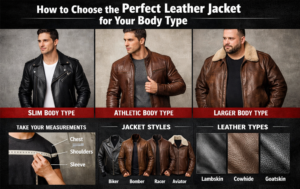
Common leather types used in jackets include cowhide, sheepskin, lambskin, and goatskin. Cowhide is known for durability, sheepskin and lambskin offer softness and lightweight comfort, and goatskin provides a balance of strength and flexibility. The best leather depends on whether you prioritize durability, softness, or lightweight wear.
Leather jackets provide good wind resistance and moderate warmth. For cold winters, insulated or lined leather jackets offer better protection. Leather jackets without insulation are better suited for mild to cool temperatures or layering with sweaters during winter.
Real leather jackets are made from animal hides and offer durability, breathability, and natural aging. Faux leather jackets are made from synthetic materials and are generally less durable but more affordable. Real leather jackets last longer and develop character over time, while faux leather may peel or crack after extended use.
A leather jacket should fit snugly but comfortably, allowing natural movement without feeling restrictive. The shoulders should align properly, sleeves should reach the wrist, and the jacket should sit comfortably at the waist or hips depending on style. A well-fitted leather jacket improves comfort and appearance.
The weight of a leather jacket depends on the leather type and construction. Cowhide jackets tend to be heavier, while lambskin and sheepskin jackets are lighter. Heavier jackets often feel more durable, while lighter jackets are preferred for daily wear and comfort.
New leather jackets may have a natural leather smell, which usually fades over time. Proper airing and storage help reduce odor. Avoid storing leather jackets in plastic covers, as this can trap moisture and cause unpleasant smells.
Leather jackets should not be machine washed. Light surface dirt can be wiped with a soft, damp cloth. For deeper cleaning, use a leather-specific cleaner or consult a professional leather cleaner. Conditioning after cleaning helps keep the leather soft and flexible.
Leather jackets should be conditioned every 3 to 6 months, depending on usage and climate. Conditioning prevents dryness, cracking, and stiffness, especially in dry or cold environments.
Real leather jackets can crack if they dry out or are exposed to excessive heat or sunlight. Faux leather jackets are more likely to peel over time. Regular conditioning and proper storage reduce the risk of cracking in real leather.
Yes, leather jackets are worn by people of all age groups. Their timeless appeal and variety of styles make them suitable for different fashion preferences and lifestyles.
Popular leather jacket styles include biker jackets, bomber jackets, racer jackets, and classic zip-up designs. Each style offers a different look and level of formality, allowing buyers to choose based on personal preference.
Yes, many leather jackets can be repaired by professionals. Common repairs include fixing zippers, stitching tears, replacing linings, and restoring faded leather. Proper maintenance reduces the need for repairs.
Leather jackets may fade slightly with age, especially when exposed to sunlight. Some fading adds character, but excessive fading can be minimized by proper storage and conditioning.
Leather jackets can be considered sustainable due to their long lifespan. A well-made leather jacket reduces the need for frequent replacement, making it a long-term investment compared to disposable fashion items.
Before buying a leather jacket, check leather quality, stitching, lining, fit, and comfort. Understanding the leather type and care requirements helps ensure long-term satisfaction.
Final Thoughts on Leather Jackets
Leather jackets remain one of the most reliable and versatile outerwear options available. Understanding leather quality, fit, care, and usage helps buyers make confident decisions. This FAQ guide is designed to answer real buyer questions and support smarter purchases.
For more detailed guides, product insights, and leather care tips, explore the Leather Jackets section on Frenzy Blog.