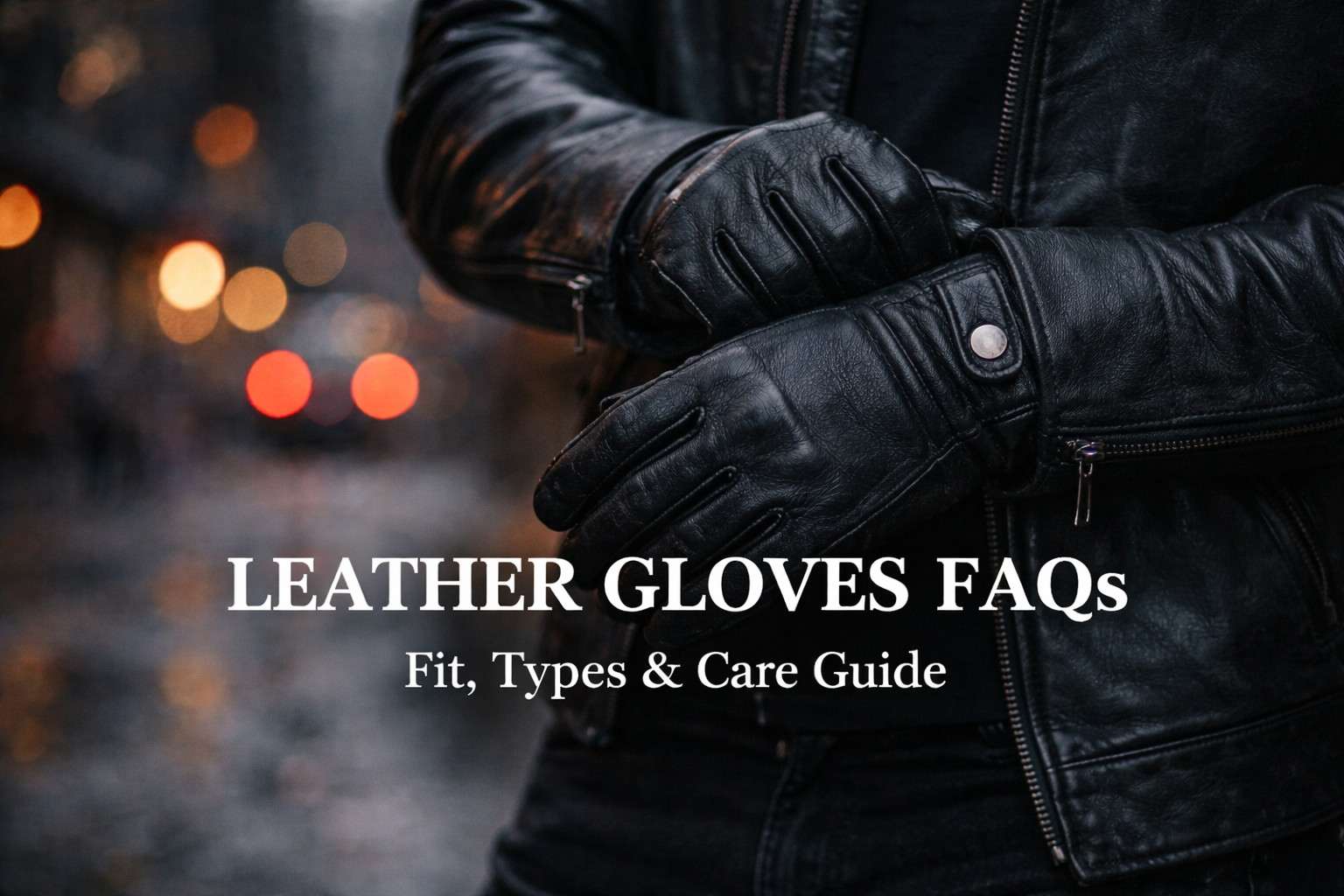
Leather gloves combine function, durability, and style. Whether used for fashion, riding, winter protection, or work, buyers often have questions about fit, leather types, comfort, maintenance, and longevity. This Leather Gloves FAQs guide answers the most common questions to help you choose the right pair with confidence.
Understanding leather quality and proper sizing is essential before investing in leather gloves.
Leather gloves are used for fashion, warmth, protection, riding, work, and outdoor activities. Some gloves are designed for style and daily wear, while others provide grip, durability, and protection for specific tasks.
Leather gloves should fit snugly without restricting finger movement. They should feel slightly tight at first because genuine leather molds to the shape of your hands over time. Avoid gloves that feel overly loose, as they may stretch further.
Yes, genuine leather gloves stretch slightly with wear. This natural flexibility improves comfort and fit. However, stretching is minimal, so choosing the correct size from the start is important.
Common leathers used in gloves include cowhide, goatskin, and lambskin. Lambskin is soft and flexible, goatskin offers durability and grip, and cowhide provides strength and long-lasting wear.
Leather gloves provide wind resistance and moderate warmth. For cold climates, insulated or lined leather gloves offer better protection against low temperatures.
Leather gloves are water-resistant but not fully waterproof. Prolonged exposure to water can stiffen the leather. If they get wet, allow them to air dry naturally and apply conditioner afterward.
Use a soft, damp cloth to remove dirt. For deeper cleaning, use a leather cleaner made specifically for gloves. Avoid machine washing. Conditioning helps maintain softness and prevent cracking.
Condition leather gloves every 3–6 months depending on use. Regular conditioning prevents dryness, cracking, and stiffness, especially in dry or cold environments.
Real leather gloves may crack if not conditioned properly. Faux leather gloves are more prone to peeling over time. Proper care significantly increases the lifespan of genuine leather gloves.
High-quality leather gloves are durable, stylish, and long-lasting. When maintained correctly, they provide better longevity and comfort compared to synthetic alternatives.
Final Thoughts on Leather Gloves
Leather gloves are a practical and stylish accessory when chosen correctly. Understanding fit, leather type, insulation, and care ensures long-term performance and satisfaction.
Explore more leather guides and product insights on Frenzy Blog to make informed decisions before buying.